
Lessons from Scandinavia
Jonathan King, Principal BNKC
This spring, I had the chance to spend time in Helsinki, Copenhagen, and Stockholm with my wife and our boys, who are somehow in their mid-twenties now. Over a few weeks, we explored three cities with a genuine, lived commitment to design excellence, sustainability, and public life. Not the kind that gets announced in a press release. The kind you feel walking around, or in our case, walking everywhere: on foot, by public transport, and in pursuit of the best cardamom bun in Scandinavia. In Helsinki, that pursuit was accompanied by a daily willingness to subject ourselves to temperatures that no reasonable person would voluntarily seek out. Here are a few things that stuck with me.
PUBLIC SPACE AS ESSENTIAL INFRASTRUCTURE
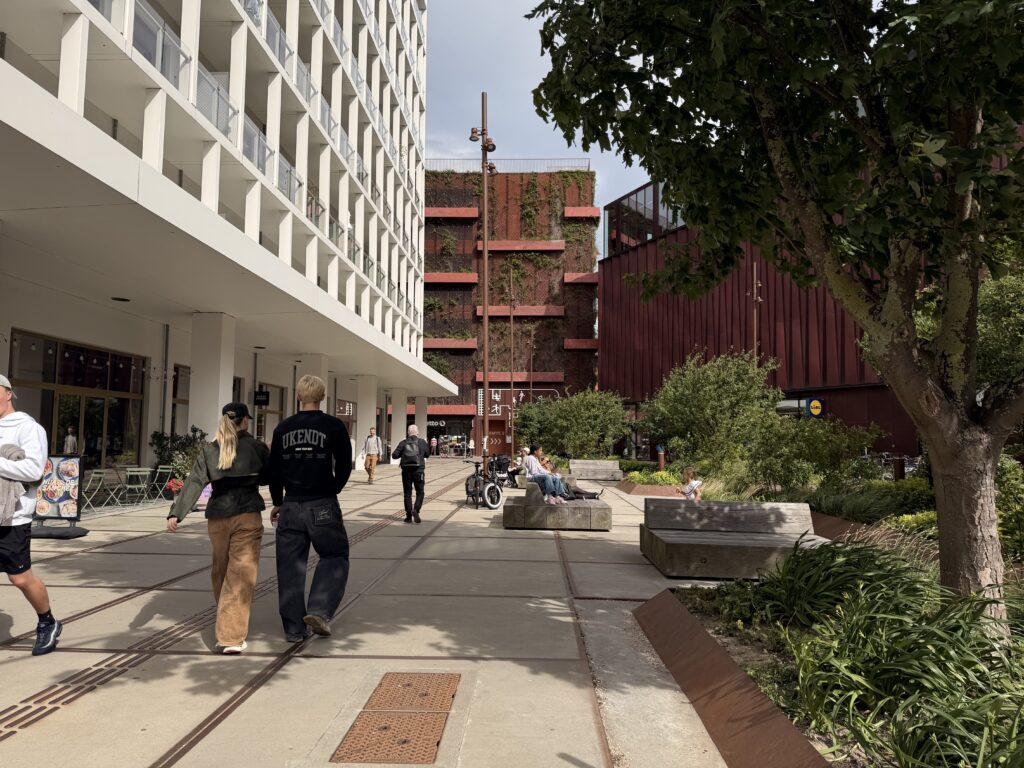
Nordhavn
The best public spaces aren’t the areas left over once the buildings go in. Walk around Nordhavn, Copenhagen’s former industrial harbour and now one of the most interesting new neighbourhoods in Europe, and you feel the difference immediately.
The masterplan, by COBE, doesn’t try to specify every detail. It’s more like a set of strong intentions: plan one island at a time, stay flexible, leave room for the city to surprise you. At street level, those intentions produce something that genuinely rewards wandering, which we did, across several hours and at least one very necessary cardamom bun stop. Water weaves through the whole district. Canals, basins, harbour edges. You’re never far from it, and the neighbourhoods feel intimate rather than overwhelming despite the scale of what’s been built.
The public spaces feel designed to make unplanned encounters likely, as if the city is quietly conspiring to get people to run into each other. Cars are largely an afterthought (the good kind, for once) with an elevated cycle expressway threading the neighbourhoods together and connecting back into the city. The whole thing has the feeling of somewhere that was figured out from the outside in, rather than the buildings first approach that produces so many forgettable in-between spaces elsewhere.
That’s the move I keep thinking about for Toronto: treat the public realm as the brief and let the buildings respond to it.
HUMAN SCALE MATTERS
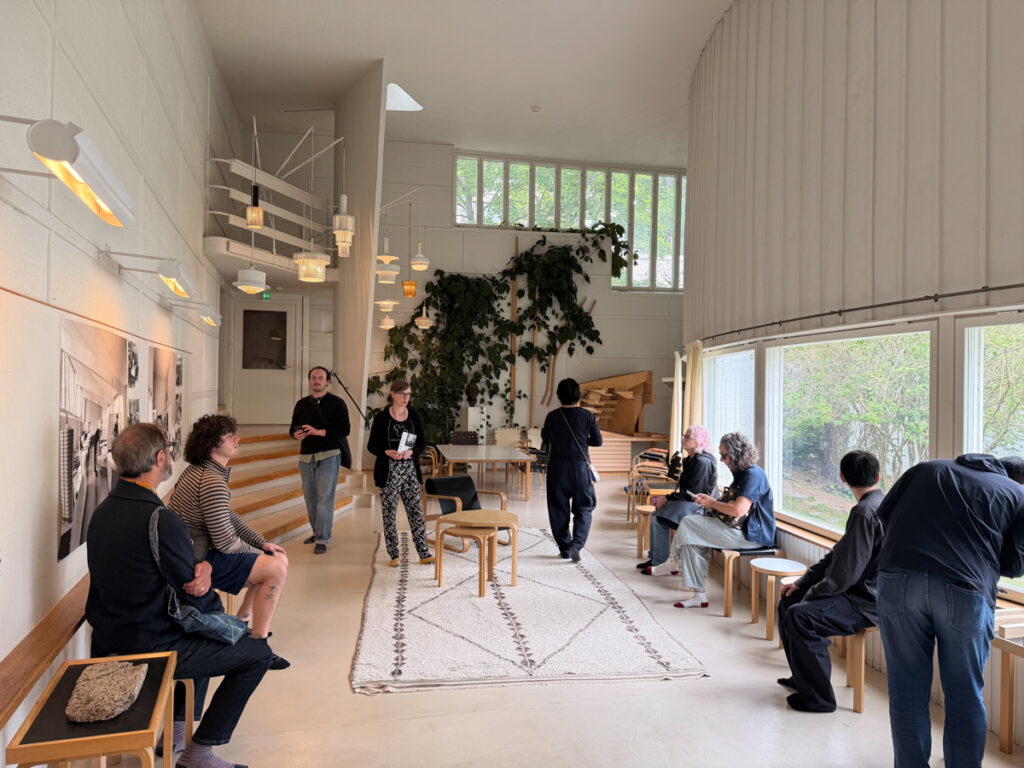
Alvar Aalto’s Office & Studio
There’s a particular kind of day in Helsinki that starts with good intentions and ends with you having strong opinions about a man who died in 1976. I spent mine dragging my family around Alvar Aalto’s work across the city, his home, his office, the House of Culture, and finally Finlandia Hall, and came away with the slightly humbling realisation that one architect had thought more carefully about how buildings feel to be inside than most of us will think about anything.
Details of Alvar Aalto’s Office & Studio
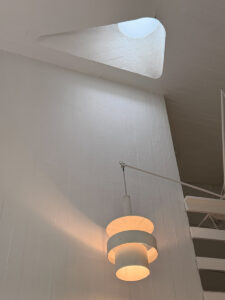
Details of Alvar Aalto’s Office & Studio
My kids, to their credit, came to the same conclusion independently. My wife had already reached it, shortly after we ate what may have been the best open-faced sandwich of our lives at a tiny place we nearly walked past.
What Aalto understood, and what you feel most clearly moving between his buildings in a single day, is that scale isn’t about size. It’s about how a space relates to the body moving through it. His rooms expand and compress in ways that feel intuitive rather than composed. Low ceilings that draw you in, then suddenly generous volumes that release you. You feel it most in the domestic spaces. His home and studio are modest in footprint but never feel small because every proportion is calibrated to the person in it.
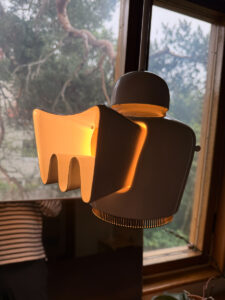
Detail of Alvar Aalto’s Home
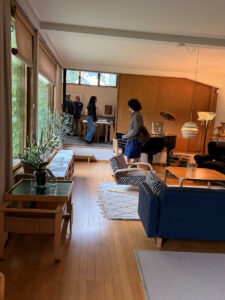
Alvar Aalto’s Home
Finlandia Hall is the counterpoint. Grand, civic, unmistakably Aalto in its curves and detailing, and also a useful reminder that even the greats have a complicated relationship with their own ambitions. The famous Carrara marble facade warped almost immediately in the Finnish climate, and the building has spent much of its life being patched up and repaired. I find this genuinely endearing. A building that aspired to monumentality and ended up needing more ongoing attention than a Victorian terrace feels, somehow, very human.
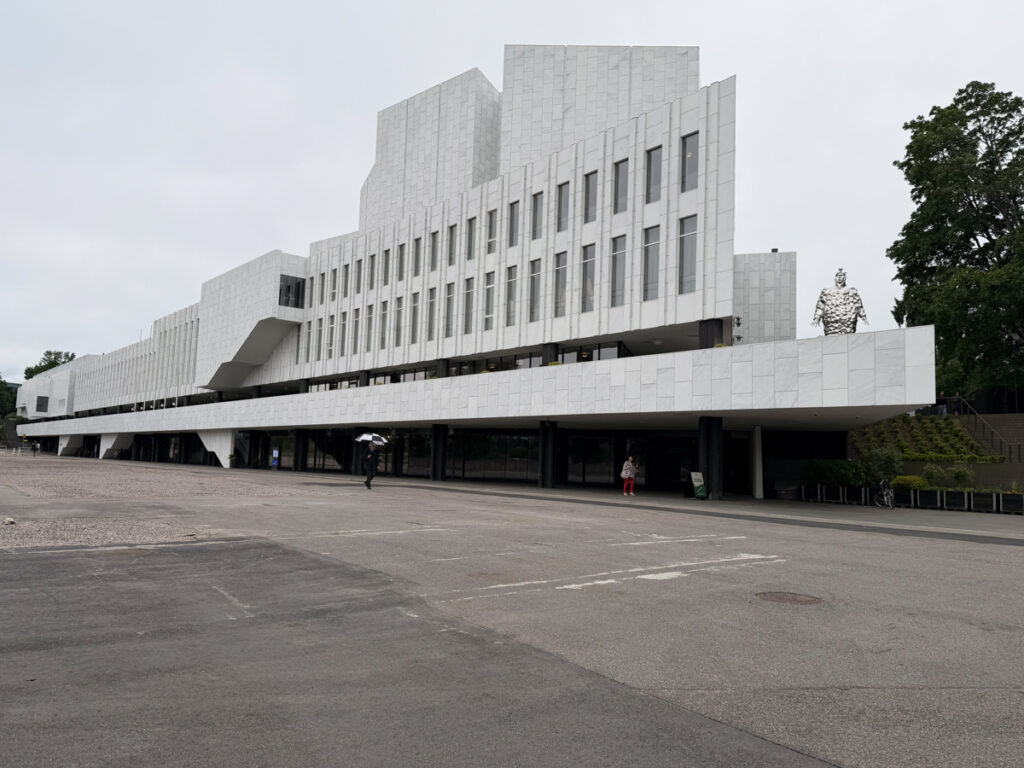
Finlandia Hall
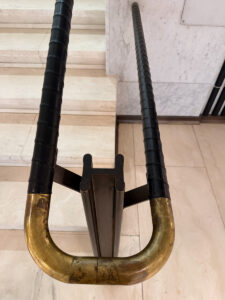
Detail Finlandia Hall
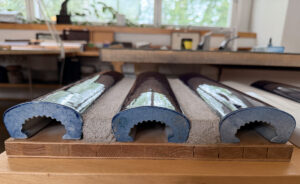
Detail Finlandia Hall
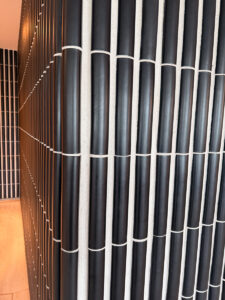
Detail Finlandia Hall
The lesson isn’t that large buildings can’t work. It’s that when they do, it’s because someone paid close attention to the experience at ground level, the threshold, the entrance, the first moment inside, rather than leaving it to resolve itself once the big decisions were made. Aalto mostly got that right. Even when the marble disagreed.
MOBILITY IS INTEGRATED, NOT ADDED LATER
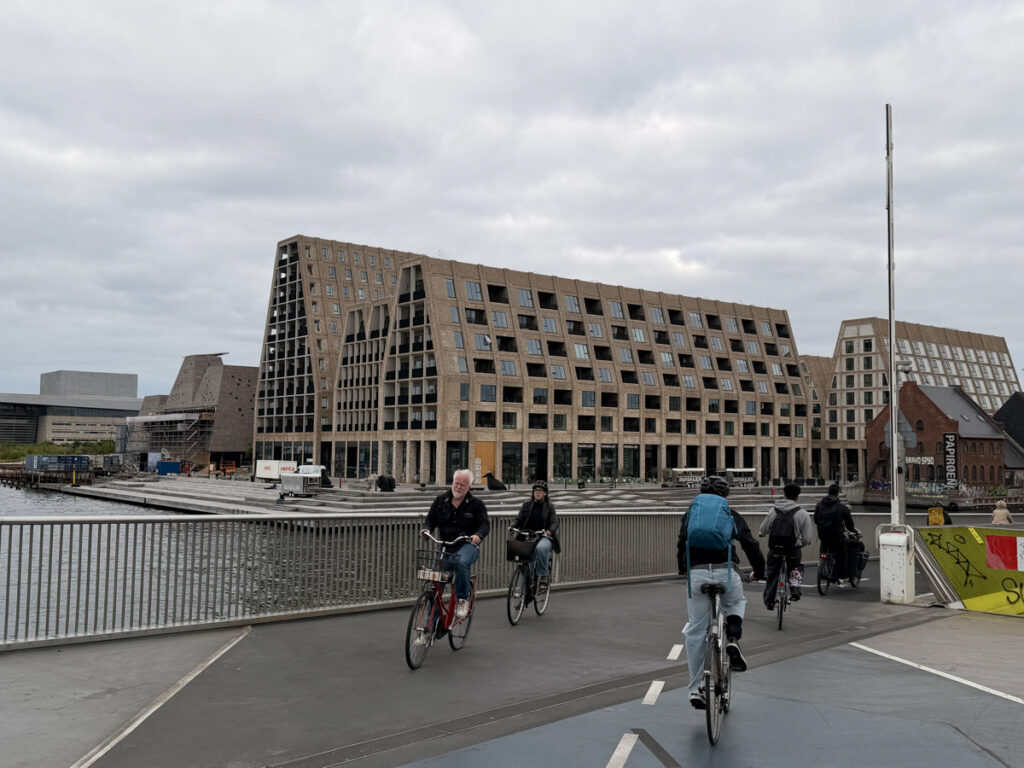
Biking in Copenhagen
In Copenhagen, the bike isn’t an afterthought, it’s a first-order design decision. We got around entirely on foot and by public transport, and even from that vantage point the cycling infrastructure is impossible to miss: grade separation at intersections, signal timing calibrated for cyclists, generous parking at every transit hub. What struck me most wasn’t the scale of it, but how unremarkable it all feels, as though the city simply couldn’t have been built any other way. That’s the real achievement. Not the cycle lanes themselves, but the fact that nobody seems to think they’re remarkable.
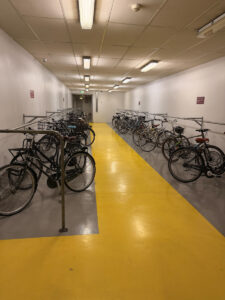
Bike storage in subway
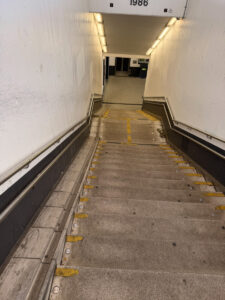
Bike ramp detail
The public transport deserves its own mention. Frequent, legible, and clean enough that my family, not typically prone to enthusiasm about buses, commented on it unprompted. When getting around a city is this easy, you spend your energy on the city itself rather than navigating it. We certainly did, though a fair portion of that energy went towards finding the definitive cardamom bun, which I’m pleased to report we eventually located in Stockholm. It had no right to be hiding something that good.
WELCOMING CIVIC BUILDINGS
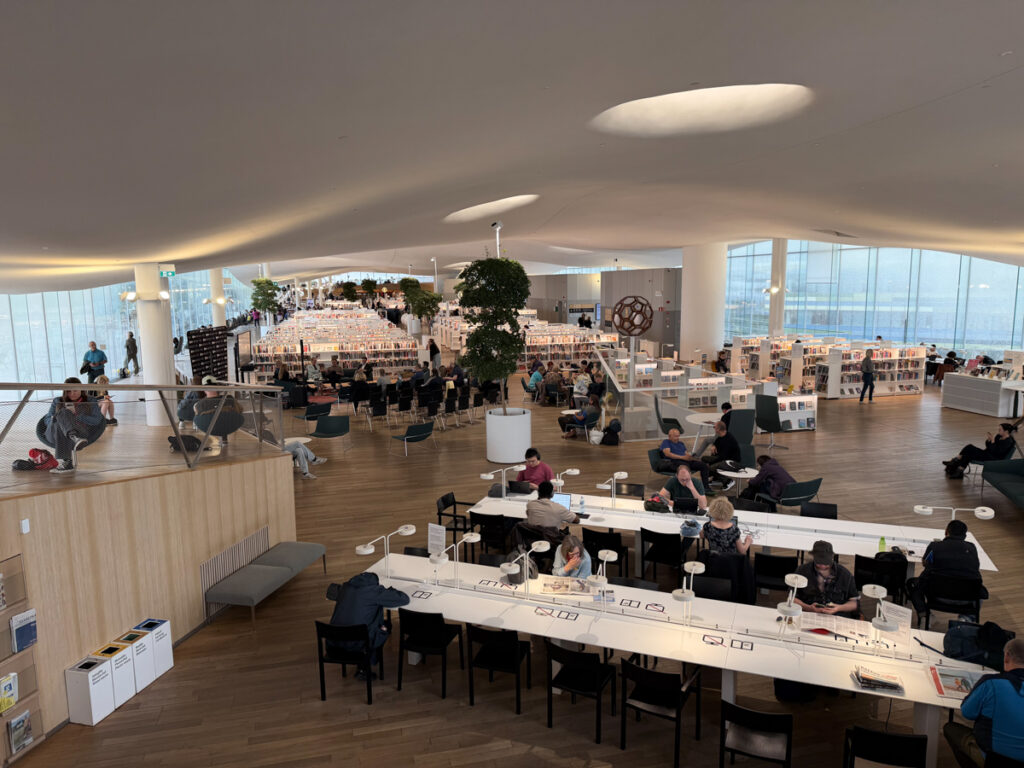
Oodi Library
The most successful civic buildings I’ve visited don’t try to impress you. They invite you in, make themselves useful, and get out of the way. Nowhere did I feel this more clearly than at Helsinki’s Central Library Oodi, which also turned out to be one of the highlights of the trip for everyone, not just the one with the architecture newsletter.
What makes Oodi remarkable isn’t any single gesture. It’s the conviction that a civic building should function as a common living room.
The ground floor has no barriers. The public square outside flows directly into the interior, with the building’s timber-clad upper volume arching overhead like a bridge. You don’t really enter Oodi so much as walk through it.
The program reflects the same thinking. Books occupy only a third of the space; the rest goes to a makerspace stocked with 3D printers and laser cutters, recording and editing studios, a cinema, a restaurant, play spaces, meeting rooms, and a rooftop terrace. All of it shaped by extensive public consultation. The mix of services reflects what people actually asked for, which shows.
We took refuge in the third-floor reading room during a rainstorm and ended up staying far longer than planned. The boys found seats to settle into, my wife observed, and I did what I always do, which is walk around looking at the ceiling. It’s a very good ceiling. Watching the extraordinary range of things people were doing, all under one roof, felt like the point entirely. Oodi sits directly opposite the Finnish Parliament, and the symbolism is intentional: this is what a building for the people actually looks like when someone means it.
A FINAL NOTE ON SAUNAS
No honest account of Helsinki omits the sauna. It would be like writing about Copenhagen and leaving out the pastries.
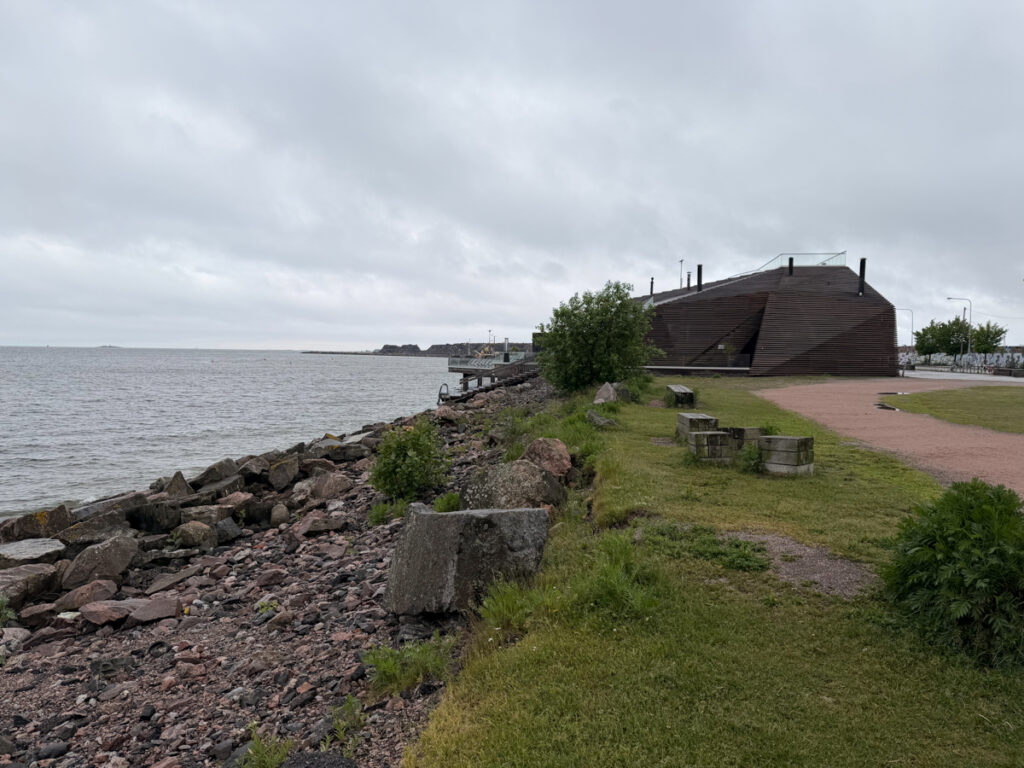
Löyly
We made sauna part of our daily routine; it becomes a rhythm surprisingly quickly. The highlight was a morning at Löyly, a public sauna right on the waterfront designed by Avanto Architects. The building itself is worth the visit: a darkened timber structure that steps down to the Baltic, unpretentious and quietly beautiful in the way that the best Finnish buildings tend to be.
What makes Löyly stick in the memory isn’t the architecture. It’s the experience of sitting in intense heat with a group of strangers and my boys, then walking down the steps and plunging into the Baltic Sea, surfacing to find that your problems have, at least temporarily, been reorganised by your body’s more urgent priorities.
What struck me afterwards, once feeling had returned to my extremities, was how naturally it fit with everything else we’d observed about how Helsinki uses its public spaces. The sauna isn’t a luxury amenity or a hotel perk here. It’s infrastructure. A shared ritual, open to everyone, built into the fabric of the city and the rhythm of the week. The Finns have understood for a very long time that public life needs places where people can simply be together without an agenda. Löyly just happens to involve more steam and significantly less clothing than your average civic building.
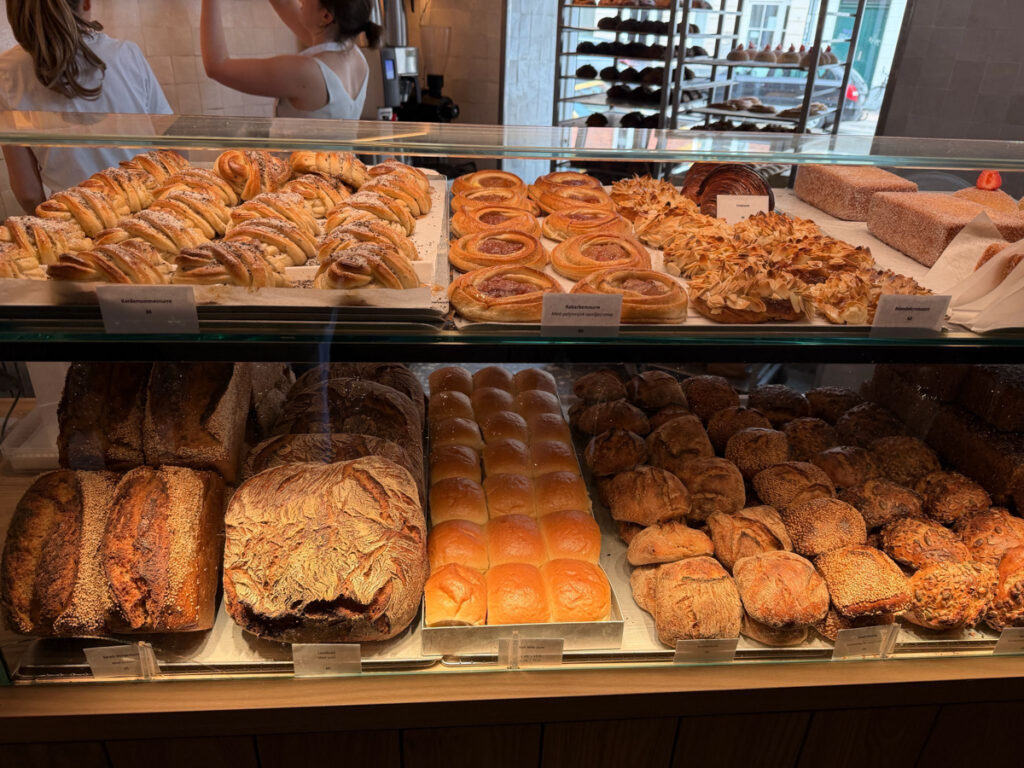
Travel rarely provides direct answers to the challenges we face in Toronto, but it does sharpen the questions. What stayed with me from Scandinavia wasn’t any single building or project. It was the consistency with which public space, mobility, and civic life were treated as essential parts of city-building. The details may differ, but the underlying lesson feels relevant everywhere: start with people, and the rest tends to follow.